
- silver-ridge
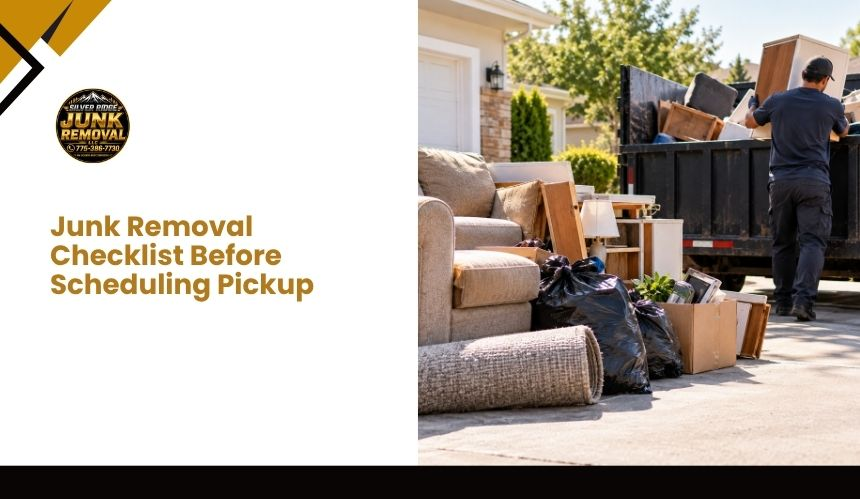
Junk Removal Checklist Before Scheduling Pickup
Scheduling junk removal without preparing the load first can lead to inaccurate quotes, rejected items, access delays, or unexpected pickup charges. A clear pre-pickup checklist helps define what needs removal, identify disposal restrictions, estimate load size, and communicate property conditions before the crew arrives.
Proper preparation also helps the removal company determine the appropriate truck capacity, labor requirements, and equipment. This guide covers the key steps to complete before scheduling a junk removal pickup.
Identify Exactly What You Need Removed
Defining the full scope of the pickup gives the junk removal company a clearer basis for estimating truck space, labor, handling requirements, and disposal needs.
Important: Include every large, heavy, or unusual item in the initial pickup scope. Leaving out a sofa, appliance, construction debris, or other bulky material can change the required truck capacity, crew size, disposal method, and final price once the team arrives.
Make A Room-By-Room Junk Inventory
Walk through each area of the property and record everything you want removed. Include furniture, appliances, electronics, boxes, household clutter, yard debris, renovation waste, garage items, and materials stored in basements, attics, sheds, or outdoor spaces.
A room-by-room inventory reduces the risk of overlooking bulky or hidden items before requesting a quote. It also gives the removal provider a more accurate description of the load, which can improve scheduling and pricing accuracy.
Separate Single Items From Bulk Loads
Determine whether the job involves one bulky object, several individual items, a concentrated junk pile, or a larger property cleanout. A mattress pickup, for example, requires a different removal plan than clearing furniture and debris from multiple rooms.
This distinction matters because junk removal companies may price services based on truck volume, item count, material weight, labor, or a combination of these factors. Clearly describing the scale of the job helps the provider allocate the correct resources.
Avoid Adding Unplanned Items At The Last Minute
Items added after the initial estimate can increase the amount of truck space, loading time, and labor required. Large furniture, construction debris, or dense materials can substantially change the original scope of work.
If the load changes before pickup day, notify the company rather than assuming the additional items will be covered under the original estimate. Early updates reduce the likelihood of pricing adjustments or capacity problems when the crew arrives.
Check Which Items The Junk Removal Company Can Take
Junk removal services do not accept every type of waste. Disposal regulations, landfill policies, recycling requirements, transportation rules, and company-specific restrictions determine what can be collected.
Did You Know? Some items that look like ordinary household junk may be subject to separate disposal rules because they contain chemicals, refrigerants, batteries, or other regulated components. Checking these items before scheduling can prevent rejected loads and last-minute disposal changes.
Confirm Commonly Accepted Junk
Many providers accept furniture, mattresses, appliances, electronics, household goods, boxes, shelving, and general clutter. Some companies also handle yard waste, outdoor equipment, remodeling debris, and other non-hazardous materials.
Acceptance policies vary by provider and location, so confirm the specific items before booking. Verifying the load in advance prevents situations where part of the junk must remain behind because it falls outside the company’s service policy.
Identify Hazardous Or Restricted Materials
Materials such as paint, solvents, gasoline, automotive fluids, pesticides, certain batteries, chemicals, and medical waste may require specialized handling. These substances can create fire, environmental, chemical, or health risks during transportation and disposal.
Do not combine restricted materials with ordinary household junk unless the provider specifically confirms that they can accept them. Materials that cannot be hauled through standard junk removal may need to be taken to a hazardous waste collection facility or another approved disposal location.
Ask About Heavy Or Specialized Items
Pianos, hot tubs, safes, large appliances, concrete, roofing debris, soil, and other dense materials may require special equipment or additional crew members. Some items may also need dismantling before they can be removed safely.
Weight can affect pricing even when the load occupies relatively little truck space. Dense debris can reach vehicle weight limits before the truck is physically full, which is why heavy materials should always be disclosed when requesting an estimate.
Estimate How Much Junk You Have Before Requesting A Quote

Accurate load information allows a junk removal company to estimate truck capacity, labor, hauling time, and potential disposal costs more effectively.
Estimate The Volume Of The Load
Describe the junk using measurable details rather than general phrases such as “a large pile.” Count major items, estimate pile dimensions, or explain approximately how much floor or storage space the junk currently occupies.
For example, listing one sofa, two mattresses, six boxes, and several bags of garage clutter gives the provider more useful information than requesting a general household pickup. Better volume estimates reduce uncertainty when pricing the job.
Take Clear Photos Of The Items
Photos allow the removal provider to see the quantity, size, condition, and type of materials before arriving. Capture the entire pile as well as oversized objects, dense debris, or items that may be difficult to carry.
Include the surrounding area when access conditions may affect removal. Images showing staircases, narrow doorways, gates, or long carrying distances can help the company determine whether additional labor or equipment may be necessary.
Note Items That Require Extra Labor
Some junk requires more handling than standard lifting and loading. Furniture may need disassembly, appliances may be located upstairs, and oversized objects may need to be maneuvered through narrow passages.
Mention these conditions when requesting a quote because labor complexity can influence crew size, equipment requirements, service duration, and pricing. Accurate disclosure also reduces the chance of delays once removal begins.
Prepare The Property For An Efficient Junk Pickup
Preparing the removal route allows the crew to move items safely and efficiently while reducing unnecessary handling delays and potential property damage.
Did You Know? A blocked or narrow removal path can increase carrying time and make bulky-item handling more difficult. Clearing doorways, stairs, gates, and hallways before pickup gives the crew a more direct route and reduces the risk of bumps, scrapes, or delays.
Create A Clear Path To The Junk
Inspect the route between the junk and the loading area. Remove obstacles from hallways, staircases, entrances, gates, driveways, and other areas the crew will need to use during the pickup.
For apartments or commercial buildings, check whether elevators, loading docks, service entrances, parking areas, or access codes must be reserved or arranged beforehand. Restricted access can significantly slow the removal process if it is not addressed before arrival.
Separate Items You Want To Keep
Move possessions that should remain on the property away from the removal pile. When possible, group all unwanted items together so the crew can immediately distinguish what should be loaded.
Clear separation reduces confusion during fast-moving cleanouts and lowers the risk of valuable or necessary belongings being removed accidentally. Labeling uncertain items can provide an additional layer of control.
Disassemble Or Disconnect Items When Necessary
Large furniture may need to be dismantled before it can pass through doorways, staircases, or narrow halls. Appliances connected to water, gas, or electrical systems may also require preparation before removal.
Ask the junk removal company whether disassembly or basic appliance preparation is included in the service. Utility connections that require technical work should be handled safely and, where necessary, by a qualified professional.
Provide Important Property Access Details
Tell the provider about stairs, elevators, gated entrances, narrow doors, limited driveway access, parking restrictions, long carry distances, or building access procedures before scheduling the appointment.
These details affect how the crew plans the job. Advance notice allows the company to determine vehicle positioning, staffing needs, equipment requirements, and the amount of time likely required for loading.
What Information Should You Confirm Before Scheduling Junk Removal?
Before booking, verify the service details that affect pricing, timing, and pickup conditions. A final review creates a clear scope of work for both the customer and the junk removal provider.
Use this checklist before confirming the appointment:
- Complete list of items has been identified
- Restricted or prohibited materials have been checked
- Approximate junk volume has been estimated
- Photos have been provided if requested
- Heavy or oversized items have been disclosed
- Stairs, elevators, gates, and access restrictions have been mentioned
- Pricing structure and possible extra charges are understood
- Labor, loading, hauling, and disposal inclusions are confirmed
- Pickup date and arrival window are clear
- Presence requirements have been verified
- Payment methods and cancellation terms have been reviewed
- Donation, recycling, or special disposal requests have been discussed
Accurate information helps the removal company arrive with the appropriate truck, crew, and equipment. It also gives you a clearer expectation of the final service scope and reduces the likelihood of unexpected changes on pickup day.
A successful junk removal appointment starts with preparation. Identifying the load, verifying accepted materials, estimating volume, preparing access, and confirming booking details creates a more efficient removal process and reduces preventable delays or pricing surprises.
Frequently Asked Questions
Do I have to be home when the junk removal crew arrives?
Not always. Some junk removal companies offer contactless pickup when items are placed in an accessible location and payment or authorization is arranged beforehand. For larger cleanouts, being present can be useful because the crew may need clarification about individual belongings, pricing, or removal boundaries before loading begins.
Is a junk removal estimate the same as the final price?
An initial estimate may change if the actual load differs from the information provided during booking. Junk removal pricing can depend on truck volume, item type, weight, loading time, and disposal costs. Confirm whether the company provides a binding quote before loading or adjusts the price after inspecting the complete job onsite.
Can I schedule junk removal for the same day?
Same-day junk removal may be available, but availability depends on crew schedules, truck capacity, location, and the size of the pickup. A company advertising same-day service may still require a separate estimate or appointment. Confirm whether “same-day” refers to receiving a quote, crew arrival, or actual removal.
What happens to reusable items after junk removal?
The destination depends on the provider and the condition of the items. Reusable furniture and household goods may be donated, recyclable materials may be separated, and remaining waste may go to an approved disposal facility. If diversion matters to you, ask which charities, recycling centers, or processing partners the company actually uses.
Should I choose curbside pickup or full-service junk removal?
Curbside pickup generally works when unwanted items can be safely placed outside and require minimal handling. Full-service removal is more appropriate when furniture, appliances, or debris must be carried from inside the property. Compare what labor is included, where items must be placed, and whether stairs or dismantling affect the quoted service.
What if I discover more junk after I have already booked the pickup?
Contact the provider before the appointment and describe the additional items rather than waiting for the crew to arrive. Junk removal jobs are often priced partly by load size or truck space, so a larger-than-booked load may affect capacity and cost. Early notice gives the company an opportunity to adjust the service plan.
Can I reschedule or cancel a junk removal appointment without being charged?
Cancellation and rescheduling rules vary by company, particularly for short-notice changes or reserved labor and truck capacity. Review the provider’s policy before booking and ask when fees begin to apply. If plans change, contact the company as early as possible instead of assuming the appointment can be moved without a charge.