
- silver-ridge
What Items Can a Junk Removal Company Take?
Junk removal companies can haul away many unwanted household, commercial, outdoor, and renovation items, but acceptance depends on material type, weight, disposal requirements, and local regulations. Furniture, appliances, electronics, yard debris, and construction waste are commonly accepted, while hazardous or regulated materials may require specialized disposal. This guide explains what junk removal companies typically take, which items may be restricted, and how to confirm acceptance before pickup.
What Items Do Junk Removal Companies Commonly Take?
Most junk removal companies accept non-hazardous materials that crews can safely lift, transport, and process through donation centers, recycling facilities, transfer stations, or approved disposal sites. Exact acceptance policies vary by provider and location.
Furniture And Household Items
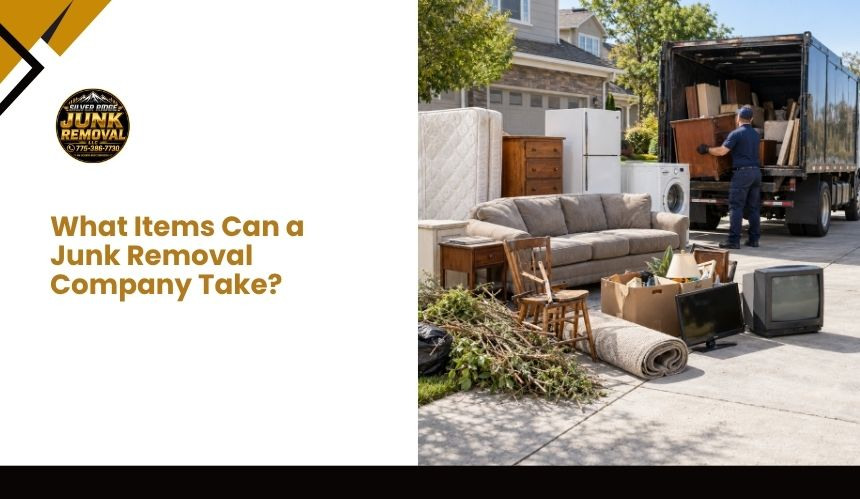
Furniture is one of the most common categories handled by junk removal companies. Typical items include sofas, couches, chairs, recliners, tables, desks, dressers, cabinets, bed frames, shelving, rugs, carpets, and storage units.
Crews can also collect general household clutter generated during moving, downsizing, estate cleanouts, or property turnover. Oversized furniture may require partial disassembly when narrow hallways, staircases, or doorways prevent safe removal in one piece.
Appliances And Electronics
Many junk removal services take refrigerators, freezers, washers, dryers, dishwashers, ovens, microwaves, televisions, computers, monitors, printers, and smaller household appliances. Working and non-working equipment may both qualify for collection.
Electronics and appliances can require different processing from general trash because they contain metals, wiring, batteries, refrigerants, or electronic components. Refrigerators and freezers may also involve additional disposal requirements because refrigerant must be recovered through an approved process.
Outdoor And Yard Items
Outdoor junk removal can cover patio furniture, grills, lawn equipment, fencing materials, garden containers, damaged outdoor equipment, and items stored in garages or sheds. Companies may also accept branches, brush, leaves, and other landscaping debris.
Yard waste acceptance depends on local disposal systems because organic materials may need to be separated from ordinary household waste. Large branches, soil, or unusually heavy landscaping materials may also be subject to quantity or weight restrictions.
Office And Commercial Junk
Commercial junk removal commonly includes desks, office chairs, filing cabinets, shelving, old electronics, displays, packaging materials, fixtures, and unused equipment. These services are often used during relocations, renovations, business closures, and tenant turnover.
Larger commercial cleanouts usually require advance planning because the quantity and type of material affect truck capacity, labor, loading time, and disposal routing. Businesses may also need specialized recycling for electronics or other regulated equipment.
Can Junk Removal Companies Take Construction And Renovation Debris?
Many junk removal companies accept materials from home improvement, repair, and light demolition projects. Heavy construction debris may be handled differently because weight can become a limiting factor before truck volume is reached.
Did you know? Construction debris such as concrete, brick, and tile can reach a truck’s weight limit long before the truck looks full, which is why many junk removal companies price heavy materials differently from ordinary household junk.
Common Remodeling And Demolition Debris
Accepted renovation materials may include drywall, lumber, cabinets, doors, flooring, tile, trim, molding, plumbing fixtures, and dismantled building components. These items frequently result from kitchen remodeling, bathroom renovation, flooring replacement, and small demolition projects.
Sharp nails, broken tile, splintered lumber, and irregular debris can create handling risks, so materials may need to be stacked or contained before removal. Describing the debris accurately before booking allows the company to plan for safe loading and appropriate disposal.
Heavy Materials That May Have Limits
Concrete, brick, stone, dirt, roofing materials, and similar debris are considerably denser than ordinary household junk. A relatively small pile can reach vehicle weight limits even when substantial truck space remains available.
Junk removal companies may restrict the quantity of heavy materials or charge according to weight rather than volume. Disposal sites may also separate construction and demolition waste, making advance disclosure necessary for accurate pricing and transportation planning.
What Bulky Or Specialty Items Can A Junk Removal Service Haul Away?
Bulky and specialty items are often accepted when they can be safely dismantled, carried, loaded, and transported. Their size and weight can affect labor requirements and service pricing.
Mattresses, Box Springs, And Large Furniture
Mattresses, box springs, sectional sofas, wardrobes, oversized tables, cabinets, and similar furnishings are commonly removed by professional junk haulers. These items are difficult for homeowners to transport because they often require multiple people and suitable vehicles.
Disposal requirements for mattresses and upholstered furniture can differ by location, particularly where dedicated recycling programs operate. Providing dimensions or photographs before pickup helps the company evaluate access restrictions and determine whether disassembly will be necessary.
Hot Tubs, Exercise Equipment, And Recreational Items
Some junk removal companies accept hot tubs, treadmills, weight machines, pool tables, basketball hoops, playsets, trampolines, and similar recreational equipment. These objects usually require more labor than standard furniture removal.
Large equipment may need to be disconnected, drained, dismantled, or cut into transportable sections before loading. Hot tubs, for example, may require electrical disconnection and drainage before the removal crew can begin dismantling the structure.
Sheds, Cabinets, And Other Dismantled Structures
Dismantled sheds, cabinets, shelving systems, fencing, and small outdoor structures may be accepted as long as the materials can be safely loaded. The resulting debris may include lumber, metal, roofing material, hardware, and other construction components.
Removing an intact structure is different from hauling pre-dismantled materials. Some junk removal companies offer light demolition, while others only provide collection, so customers should confirm whether dismantling is included before scheduling.
What Items May Require Special Handling Or Cannot Be Taken?
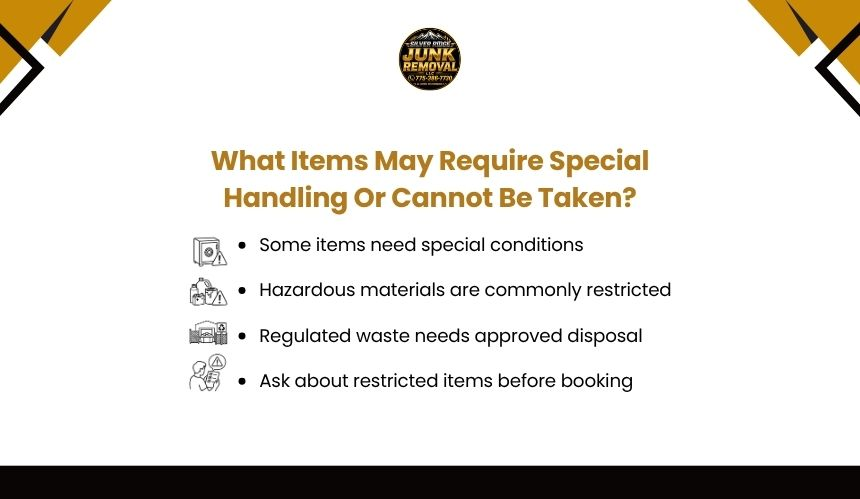
Hazardous, regulated, or potentially dangerous materials are the main exceptions to standard junk removal services. These substances often require specialized transportation, storage, treatment, or disposal procedures.
Important: Never mix hazardous materials with regular junk for pickup. Chemicals, fuels, asbestos-containing materials, medical waste, and similar regulated substances may require licensed handlers or designated disposal facilities to prevent safety risks and improper disposal.
Items That May Be Accepted Under Certain Conditions
Tires, batteries, paint, propane tanks, refrigerators, electronics, and certain specialty materials may be accepted only under specific conditions. Policies depend on the junk removal company and the facilities available within the local waste-management system.
Additional processing fees may apply when materials must be delivered to specialized recycling or recovery centers. Providing the exact item type before booking allows the company to confirm whether an approved disposal route is available.
Hazardous Or Regulated Materials Commonly Restricted
Standard junk removal crews generally do not handle pesticides, gasoline, motor oil, industrial chemicals, certain solvents, asbestos-containing materials, medical waste, or biohazardous substances. These materials can create contamination, fire, inhalation, and exposure risks.
Regulated waste typically requires licensed handling or designated collection facilities rather than ordinary hauling. Mixing hazardous substances with household junk can also violate local disposal rules and prevent an entire load from being accepted at a facility.
What Should You Do With Items A Junk Removal Company Cannot Take?
Rejected materials should be directed to a disposal program designed for the specific waste category. Household hazardous waste centers commonly handle chemicals, paints, pesticides, and related substances, while electronics recyclers process computers, televisions, batteries, and similar devices.
Automotive fluids, tires, asbestos-containing materials, and biohazardous waste may require specialized recycling programs or licensed contractors. Checking municipal waste resources can help identify the correct facility without placing regulated materials into ordinary trash.
How Are Removed Items Disposed Of After Pickup?
Junk collected from a property may follow several disposal pathways depending on its condition and material composition. Reuse, donation, recycling, material recovery, and landfill disposal are common outcomes.
Donation And Reuse
Furniture, household goods, working appliances, and other usable belongings may be sent to donation organizations when they meet condition and safety requirements. Donation availability also depends on whether local organizations currently accept the item category.
Items that are broken, contaminated, severely damaged, or unsafe generally cannot be donated. Reuse keeps functional products in circulation longer and reduces the amount of material entering waste-processing facilities.
Recycling And Material Recovery
Metals, appliances, electronics, cardboard, wood, and selected construction materials may contain components that can be separated and recycled. Processing facilities recover materials based on local capabilities and market demand.
Electronics can yield metals, wiring, plastics, and circuit-board materials, while appliances can provide steel and other recyclable components. Construction debris may also be sorted when regional recycling facilities accept wood, metal, concrete, or similar materials.
Disposal Of Non-Reusable Materials
Materials that cannot be reused, donated, or recycled are generally transported to approved transfer stations or disposal facilities. The destination depends on the waste category, contamination level, landfill policies, and applicable regulations.
Professional junk removal companies typically coordinate transportation and disposal as part of the service. Customers who want greater transparency can ask how the provider separates recyclable, reusable, and non-recoverable materials.
How Can You Confirm Whether Your Junk Will Be Accepted Before Booking?
Providing accurate information before pickup is the most reliable way to prevent rejected items and unexpected fees. The company can then determine whether the load meets its hauling and disposal requirements.
Make An Item List Before Contacting The Company
Create a basic inventory of furniture, appliances, electronics, construction debris, heavy objects, and unusual materials. Approximate quantities and sizes provide enough information for the company to evaluate truck space and disposal requirements.
Photographs can be useful for large cleanouts or mixed loads because they show volume, item dimensions, and access conditions. This allows the provider to prepare suitable equipment and a crew capable of completing the removal efficiently.
Ask About Restrictions And Additional Charges
Ask whether the company has specific policies for appliances, mattresses, electronics, heavy debris, construction materials, tires, or specialty items. These categories are more likely to have quantity limits or additional processing requirements.
Pricing should also clarify whether loading, transportation, disposal fees, labor, and basic disassembly are included. Understanding these charges before the appointment reduces the likelihood of cost changes after the crew inspects the load.
Mention Unusual Items Before The Crew Arrives
Hot tubs, safes, pianos, exercise machines, refrigerant-containing appliances, heavy construction debris, and potentially regulated materials should be disclosed during scheduling. Each can change the equipment, crew size, loading method, or disposal process required.
Early disclosure also gives the company an opportunity to reject materials it cannot legally or safely transport. Customers can then arrange an alternative disposal method rather than discovering the restriction after the crew arrives.
Frequently Asked Questions
Can a junk removal company take mixed loads with different types of junk?
Most providers can collect mixed loads containing furniture, household clutter, appliances, yard items, and other non-hazardous materials during one appointment. Certain materials may need to be separated for recycling or disposal. Describing a mixed load accurately when booking helps the hauler estimate truck space, labor requirements, and processing costs.
Do junk removal companies take items from inside the house or only from the curb?
Full-service junk removal typically includes carrying approved items from bedrooms, basements, attics, garages, offices, and other accessible areas. Curbside pickup may cost less because it requires less labor. Access factors such as stairs, elevators, narrow hallways, long carrying distances, or restricted parking can influence service requirements and final pricing.
Can a junk removal company remove items if I am not at the property?
Some companies allow contactless or unattended junk removal when the items are clearly identified, accessible, and payment arrangements have been confirmed beforehand. Property owners may need to provide entry instructions or written authorization. This option is especially useful for rental turnovers, estate cleanouts, vacant properties, and remote property management.
Will junk removal companies take items that still contain personal belongings?
Furniture, cabinets, drawers, storage bins, and appliances should generally be emptied before pickup unless the company specifically agrees to remove their contents. Personal documents, cash, jewelry, medications, keys, photographs, and electronic data can easily be discarded accidentally. Checking every compartment before collection reduces the risk of losing valuable or sensitive belongings.
Can I get a donation receipt for items taken by a junk removal company?
A donation receipt may be available when usable items are delivered to a qualified nonprofit, but policies vary between haulers and receiving organizations. Ask before booking whether donation documentation can be provided. A receipt generally identifies donated property rather than assigning its tax value, so donors remain responsible for valuation and tax-record requirements.
Is curbside junk pickup cheaper than full-service removal?
Curbside collection can be less expensive because the crew spends less time carrying, navigating stairs, dismantling furniture, or moving items through the property. However, pricing still depends on volume, weight, material type, and disposal fees. Customers should compare curbside and full-service estimates rather than assuming placement alone determines the total cost.